
I recently tweeted that it would be awesome if the next incarnation of The Doctor in Doctor Who was a woman. Not only it would be interesting as a plot device, but it would also provide an adventurous and brave role model for little girls, of which even modern TV has too few (especially as leads, instead of feisty sidekicks). After all, we know from the show that it’s possible for a Time Lord to regenerate into a different gender. I got many interesting replies, both on Twitter and Facebook (where all my non-reply tweets get automatically posted as well). Some thought it was a good idea, but the most interesting ones, were the ones who thought it was a bad one. Most displayed typical gender preoccupations when asked to clarify. However, the most interesting one was from someone I quite respect, who asked what is and what isn’t sexism, demonstrating an honest interest to understand. I thought it would be interesting to post my reply here as well, with a few edits and additions to make it more fit for a blog post.
Well I have a problem and I am trying to solve it. Can you define in explicit terms what is NOT considered as sexism? Prejudice is one thing. Discrimination is a completely different thing.
Both prejudice and gender-based discrimination are sexism. Prescriptive gender stereotypes are sexist (e.g. women have to be nurturing, men have to be tough) as they oppress the part of the population that doesn’t conform to them. Statistics aren’t sexist (e.g. “Many women are nurturing” isn’t a sexist statement, “Women are nurturing” or even worse “women should be nurturing” both are). However, for some reason society has a tendency to turn statistics into prescriptive stereotypes quite quickly.
You might ask, why is a positive stereotype such as the one above, a bad thing? Because it sets expectations. If I, as a woman, am not nurturing, it’s seen as a lacking of mine, a way I’m broken, something that’s wrong with me. If a man isn’t nurturing, it’s fine and kind of expected.
Basically being treated differently because of gender, is sexist. If you reverse the genders in a situation, and it sounds weird to you, you’ve just stumbled on some sexist assumption you make about what men and women can be and/or do. What assumption exactly is not always obvious, you might have to dig deep in your prejudices to find out.
There is a fine line between being different and considered inferior/superior.
It’s not about being inferior or superior, it’s about freedom. People should be comfortable to be themselves without being considered freaks or being assumed to be something they might even despise, because they were born with a certain gender. As long as you assume that women or men have to be this or that, there will always be people who find it oppressive or even inferior. Someone who is assertive might consider timid people inferior. On the contrary, someone timid might consider assertive people inferior. The only way to solve that is to stop thinking in gender binaries. It’s not so much that men and women are different. People are different.
Sexism is not just a female issue. Prescriptive gender stereotypes are even more oppressive for men, as modern society is more tolerant of women who deviate from their expected gender role (with a few exceptions of very strong stereotypes, e.g. the need for motherhood or beauty) than of men who do so. When a man poses traits that are generally considered feminine, he is more heavily discriminated upon. Despite the efforts of the feminist revolution, our collective subconscious still considers women weak and inferior. Deep down, we think that women “upgrade” themselves with typically masculine traits, but men “degrade” themselves with feminine traits. Being feminine is often an insult (“what a girl!”, “pussy!”) whereas being masculine is considered a good thing (“man up!”, “grow some balls!”). This is part of the reason why most homophobia is directed toward male homosexuality.
Still, males are considered expandable and this is actually true. On the other hand, females are more valuable thus, protecting them is written in our DNA codes. Wherever we want it or not, this is true. Scientific studies in the US Army demonstrated that missions with mixed crews have little or no possibility of success since males tend to get distracted from their mission due to their “built-in function” of protecting the females of the pact.
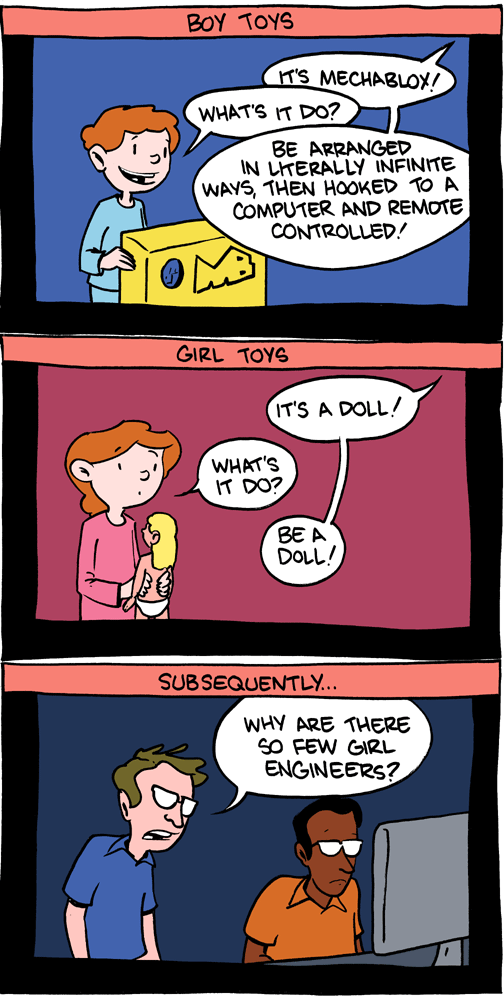
There is a lot of talk about what’s innate and what’s acquired. Characteristics we considered male or female for centuries are constantly being proven a result of nurture, either completely or by a large part, as tiny innate differences that grow intro troublesome gaps with social conditioning. Modern neuroscience keeps demonstrating how adaptable our brains are, and how society takes on the role of conditioning them on fixed gender roles from an incredibly young age. Have you ever noticed how gendered toys or child TV programmes are? How many people keep telling little girls they’re pretty and little boys that they’re smart or brave? That’s only the start of a rabbit hole that goes quite deep…
Doctor Who is clearly a male like character. Guardian, protector, adventurous!
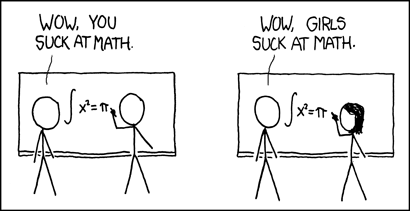
See, that’s the issue. Assigning properties to genders instead of people is problematic. Women can be all that as well, and even more would if we didn’t keep brainwashing them from kids that they can’t. This is another big issue with stereotypes: If we keep telling or showing people they can’t do something because of their gender, few will break through the barrier and do it. There has been a study where a group of women was given math problems and scored lower than the men. In another group, they were given the same problems, but were told they are designed for women to do equally well on them. Guess what? They actually did score just as well as the guys. People tend to try to conform to expectations, so getting rid of gender stereotypes allows them to reach their full potential.
A female character although interesting, will eventually transform this series into a “copy-cat” of “Nikita”, “Salt”, or “Tomb Rider”.
The reason we think so is that we’ve been so much socially conditioned that women cannot be adventurous or brave, that when we see a female that is, it overshadows all her other characteristics and our excellent pattern matching skills turn her into a stereotype of what we’ve already seen before. The more adventurous women we see, the more we will grow accustomed to the idea that they can be that as well, and start noticing their other traits. Same with people from different races: If you haven’t met many, you think all members of a different race look the same because their different physical characteristics prevail. The more you meet, the more you get used to those characteristics and start noticing the other differences between them. Same applies to everyone who’s different from what we’re used to see, e.g. different species, sexual orientations etc.